Limited access · Micropiles
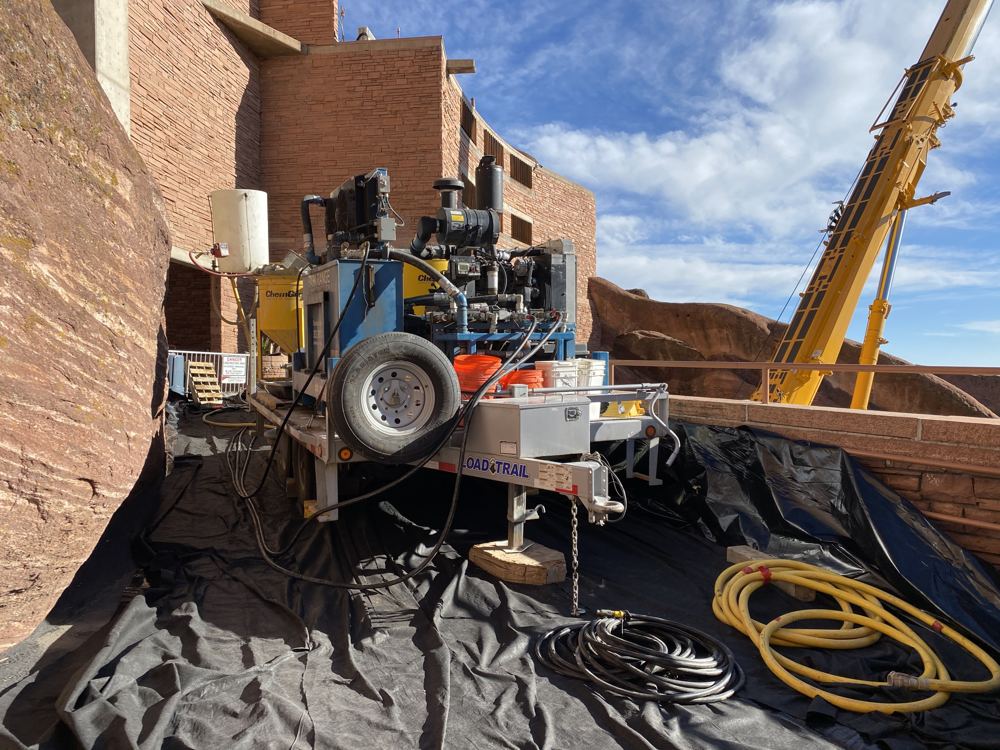
Red Rocks Stage Roof
35 six-inch micropiles drilled on a tight amphitheater site, load tested to 180 kips.
Read the case study →
Caissons and driven piles are the right answer on many jobs. Here's where helical piles and micropiles do the job better, faster or where nothing else fits.
Drilled caissons and driven piles carry heavy loads well when there's open ground and room for large equipment. But many Colorado projects don't look like that. The work is inside an existing building, next to a neighbor's foundation, on a steep slope or creek bank, or in ground full of boulders and groundwater.
That's where helical piles and micropiles earn their place. Both are small-diameter, high-capacity deep foundation elements installed with compact equipment, and both carry compression and tension loads to competent soil or bedrock.
Basements, crawl spaces, tight backyards and sites hemmed in by buildings. Our compact rigs and hand-held equipment fit where the large drill rigs and cranes needed for caissons and driven piles can't.
Piers and micropiles install right next to or through existing footings and transfer the load to competent soil or bedrock while the building stays in use.
Hospitals, historic buildings, labs and close neighbors. Helical piles screw in and micropiles are drilled, so there's no pile-hammer vibration or noise.
Helical piles don't leave an open hole, so there's no casing, slurry or dewatering, which caissons often need in wet or sandy ground.
Helical piles produce virtually no excavated soil, which matters on contaminated sites and anywhere haul-off is expensive.
Micropiles drill through obstructions, old foundations and rock and socket into bedrock, conditions that can stop a driven pile or deflect it off line.
Both systems resist tension as well as compression, which makes them a fit for substations, towers, retaining walls, tiebacks and buoyant structures.
Helical piles can be loaded as soon as they're installed, with installation torque verifying the capacity of every pier. There's no concrete to cure, and work continues through Colorado winters.
A small footprint means less clearing, grading and site disturbance on mountain, creekside and environmentally sensitive work.
Battered piles: both helical piles and micropiles can be installed at an angle. Battered helical piles are called tiebacks or soil nails. See Tiebacks, Soil Nails & Shoring.
Large-diameter caissons are often the better choice for very heavy column loads or large lateral and overturning loads on an open site. Driven piles can be the most economical option for long piles in deep, soft soils where access, noise and vibration aren't an issue.
If your project falls into one of those categories, we'll tell you. If it doesn't, our estimators will help you and your engineer compare options and price the system that fits.
A geotechnical report, plans or even a few photos are enough to start. We provide engineered stamped submittals and load testing on commercial work.
Talk to an estimator35 six-inch micropiles drilled on a tight amphitheater site, load tested to 180 kips.
Read the case study →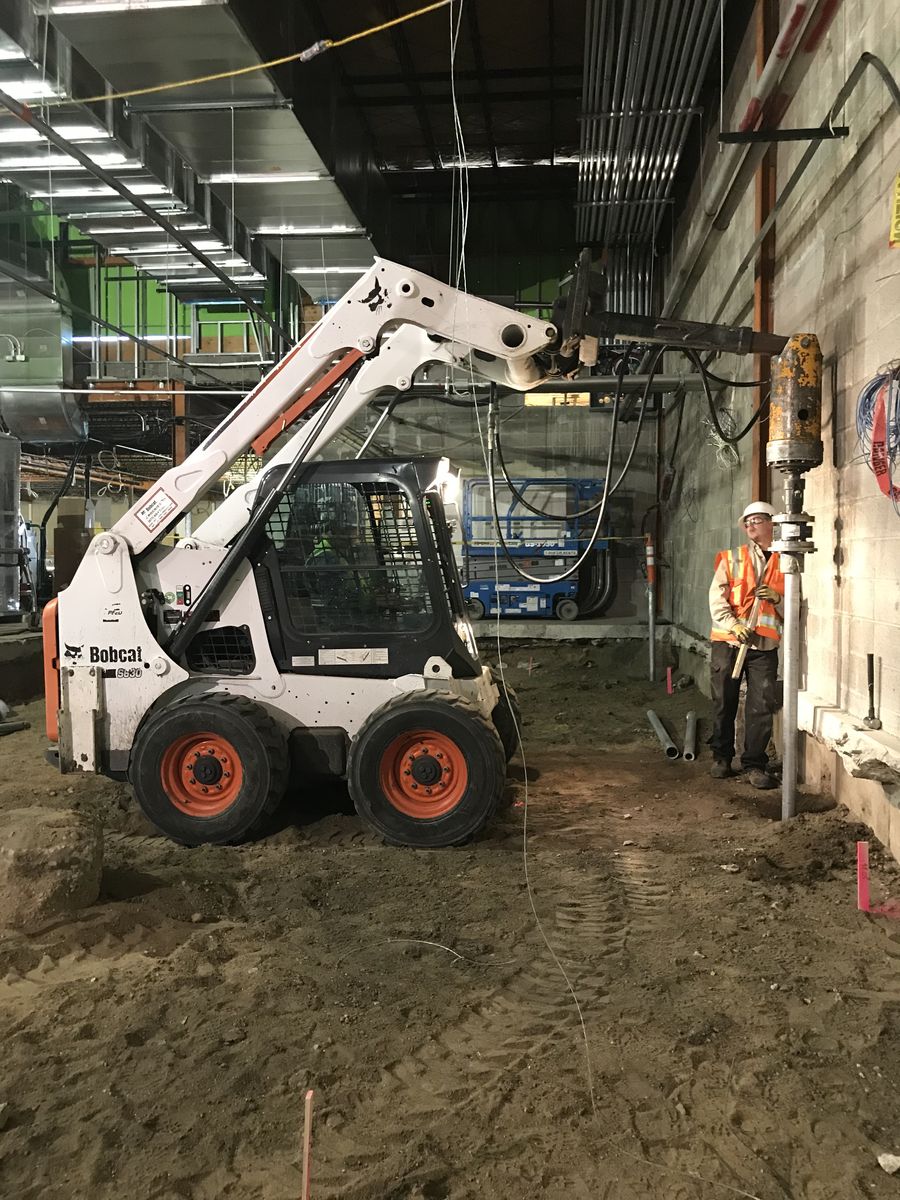
Helical piles installed inside an operating hospital with compact equipment.
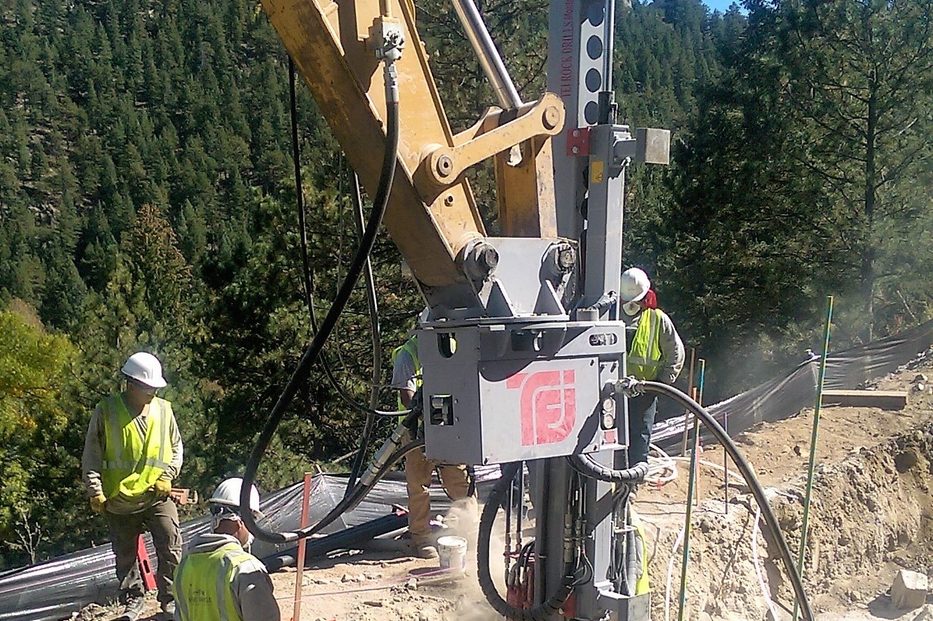
200 micropiles, including battered piles, installed along the creek for Jefferson County Road & Bridge.
Read the case study →Send your plans or geotechnical report and our estimators will recommend the right foundation.